My books: Stories of resilience and healing
Dive into deeply personal narratives and poetry crafted from real-life experiences. Discover books that offer understanding, hope, and strength for your journey.
Introduction
Narcissistic abuse leaves invisible scars.
The bruises may fade. The years may pass. The abuser may move on. But the emotional wounds often remain buried deep within the mind, body, and nervous system.
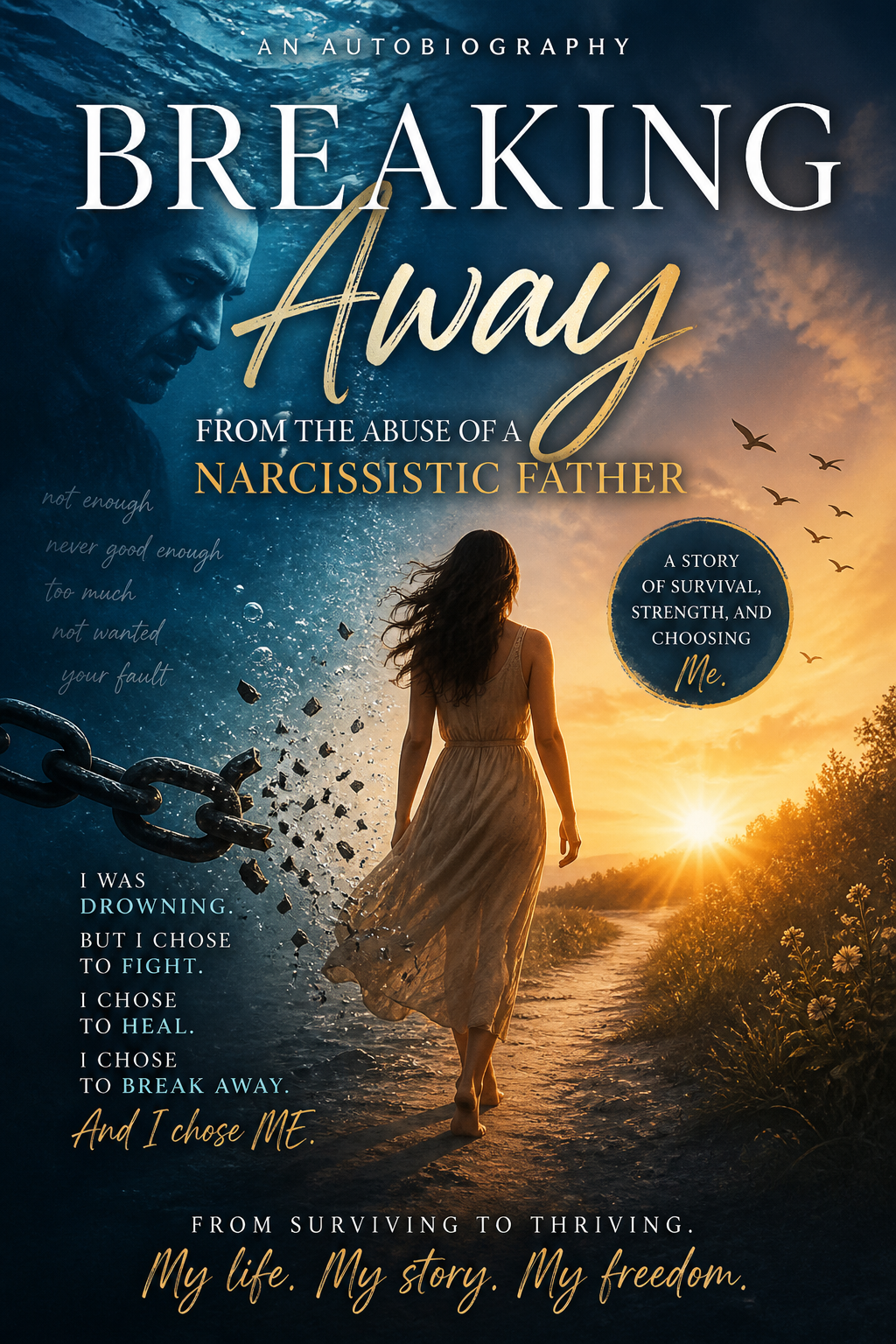
Growing up with a narcissistic father shaped nearly every aspect of my life. It taught me fear instead of safety, hypervigilance instead of peace, and survival instead of stability.
My childhood was marked not only by emotional abuse but also by a traumatic near-drowning experience that left a lasting impact on me. In a moment when my life hung in the balance, I experienced the terror of fighting to survive. Although I was rescued, the fear and helplessness of that event stayed with me long afterward, adding another layer to the trauma I carried.
For years, I struggled with anxiety, panic attacks, trauma responses, Complex Post-Traumatic Stress Disorder (C-PTSD), and Functional Neurological Disorder (FND) without fully understanding why. The effects of both ongoing abuse and life-threatening experiences became woven into my daily life, influencing how I saw myself and the world around me.
The answers began to emerge when I finally started telling the truth about my childhood.
This book is that truth.
It is a story of abuse, survival, healing, resilience, and ultimately learning that I deserved more than the life I was taught to accept. It is also a story of overcoming fear, surviving experiences that could have broken me, and discovering the strength to reclaim my life despite everything I endured.
Introduction
Poetry became my voice when I struggled to find the words.
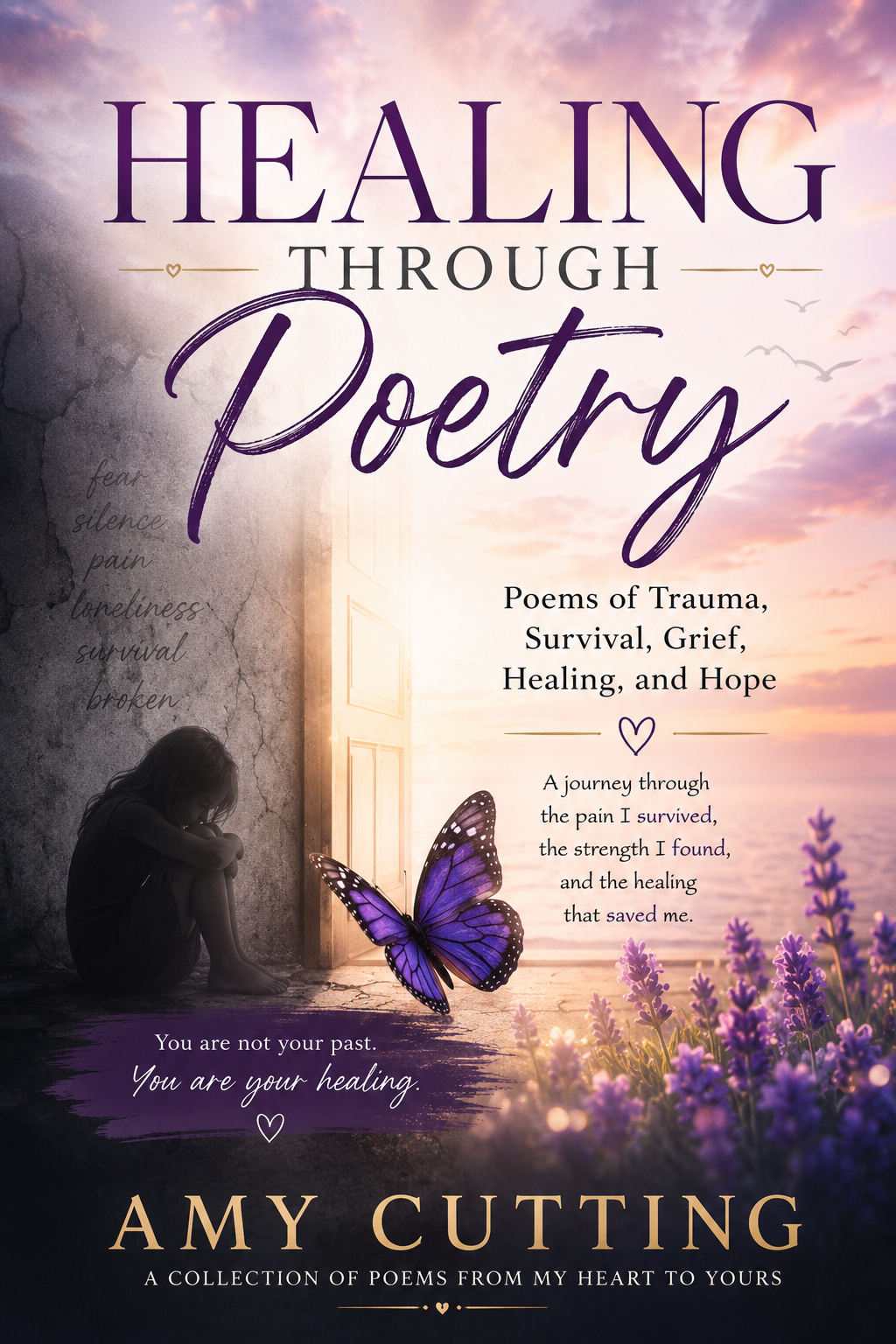
For much of my life, I carried pain, trauma, fear, grief, anxiety, and emotions that often felt too heavy to explain. There were experiences that left invisible scars on my heart and nervous system, memories that followed me long after the moments themselves had passed. At times, I felt alone in my struggles, unsure how to express the depth of what I was feeling.
Then I discovered the healing power of writing.
Poetry gave me a safe place to release emotions I had carried for years. It allowed me to express sorrow, hope, anger, heartbreak, resilience, forgiveness, and healing in ways that ordinary conversation never could. Through poetry, I found a way to transform pain into purpose and wounds into words.
This collection is a reflection of that journey.
Within these pages, you will find poems about trauma, mental health, grief, survival, love, healing, self-discovery, faith, courage, and hope. Some poems were born from moments of deep pain. Others emerged during seasons of growth and recovery. Together, they tell the story of a person learning to survive, heal, and rediscover herself after life's greatest challenges.
Healing is not a straight path.
There are days when we feel strong and days when we struggle to take the next step forward. There are moments when old wounds resurface and moments when we realize just how far we have come. This book honors all parts of that journey.
My hope is that these poems remind you that you are not alone.
If you have experienced trauma, heartbreak, loss, anxiety, depression, or life's many hardships, I hope these words bring comfort and understanding. If you are healing, I hope they encourage you to keep moving forward. And if you are searching for hope, I hope you find it within these pages.
Poetry helped me find my voice.
My hope is that it helps you find yours as well.
— Amy Cutting
Introduction
For much of my life, silence felt safer than speaking.
Silence protected me from conflict. Silence protected me from criticism. Silence protected me from the fear of what might happen if I told the truth about what I was experiencing.
Like many survivors of abuse, I learned at a young age to keep my thoughts, feelings, and pain to myself. I learned to make myself smaller, quieter, and less noticeable. I learned to put other people's needs ahead of my own while ignoring the growing pain inside me.
But silence comes with a cost.
The things we do not say do not simply disappear. They live within us. They become anxiety, fear, self-doubt, grief, shame, panic, and emotional wounds that follow us long after the events themselves have ended.
For years, I carried the weight of childhood trauma, emotional abuse, manipulation, and fear. I struggled with anxiety, panic attacks, Complex Post-Traumatic Stress Disorder (C-PTSD), and Functional Neurological Disorder (FND), often without fully understanding how deeply my past was affecting my present.
I spent much of my life surviving.
Surviving family dysfunction.
Surviving emotional abuse.
Surviving fear.
Surviving the belief that my voice did not matter.
Then something began to change.
I started asking difficult questions.
I started recognizing unhealthy patterns.
I started setting boundaries.
I started speaking truths that I had spent years hiding.
Most importantly, I began learning that I deserved more than a life controlled by fear.
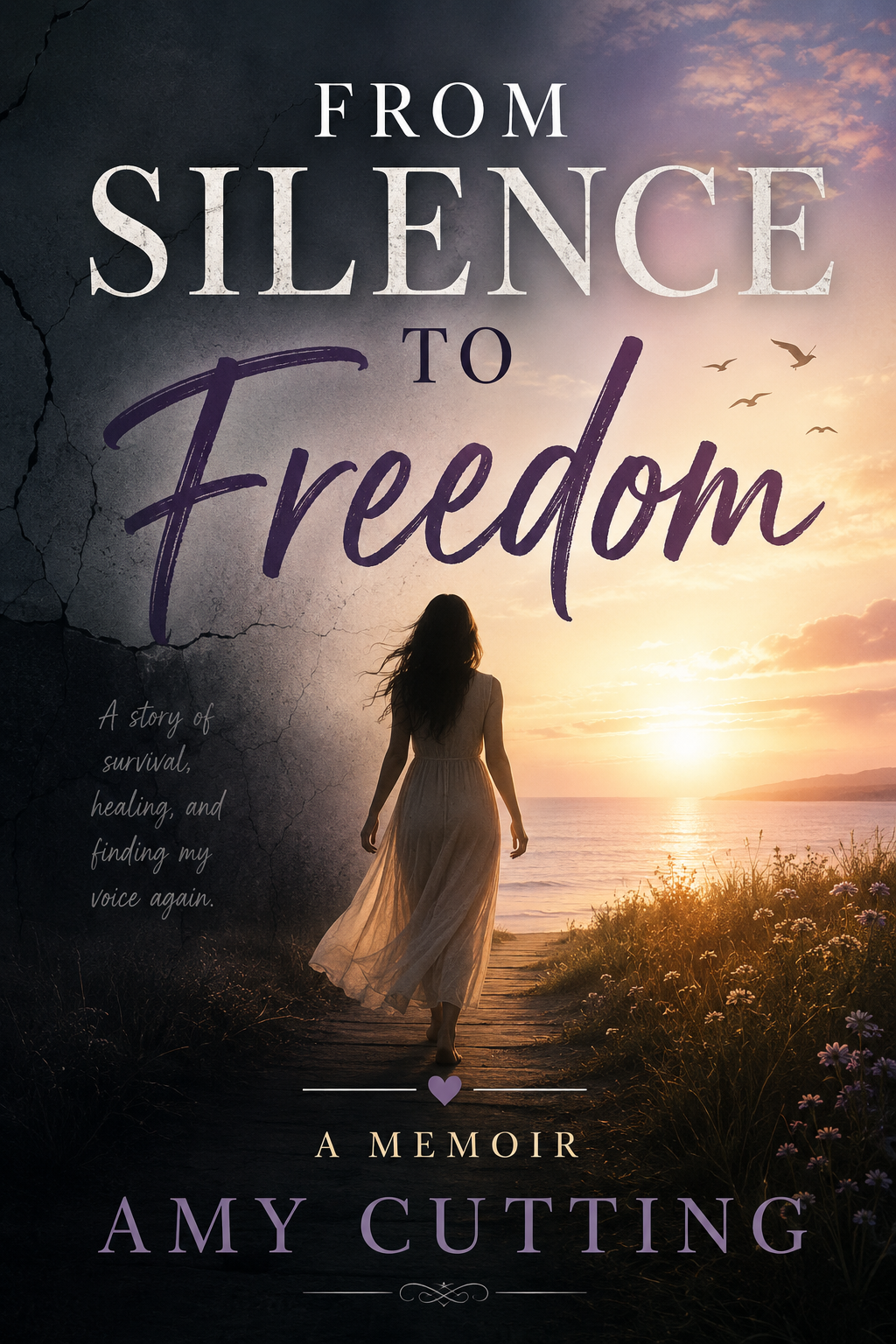
This book is the story of that transformation.
It is a story about finding strength after trauma, discovering self-worth after years of emotional pain, and learning that freedom is not just about leaving harmful situations—it is about reclaiming your voice, your identity, your peace, and your future.
Silence to Freedom is not simply a story about what happened to me.
It is a story about what happened when I finally stopped allowing my past to define me.
It is a story of survival.
It is a story of healing.
It is a story of courage.
And most of all, it is a story of freedom.
My hope is that anyone who has ever felt trapped, silenced, controlled, or broken will find a piece of themselves within these pages and discover that healing is possible, their voice matters, and they deserve a life filled with peace, hope, and freedom.
— Amy Cutting
Introduction
Trauma does not always end when the event is over.
Sometimes it follows you.
It follows you into your teenage years, into adulthood, into relationships, into your thoughts, your emotions, and even into your body. It lingers long after the danger has passed, shaping how you see yourself, how you trust others, and how safe you feel in the world.
For most of my life, I did not understand that the anxiety, panic attacks, hypervigilance, emotional overwhelm, and physical symptoms I experienced were connected to the trauma I endured as a child. I believed there was something wrong with me. I blamed myself for struggling. I questioned my emotions, my reactions, and even my memories.
What I did not realize was that my mind and body were responding exactly as they had been conditioned to respond after years of fear, abuse, manipulation, instability, and survival.
Growing up in an environment marked by narcissistic abuse, emotional control, and chronic fear changed the way I experienced life. My nervous system learned to expect danger. My body learned to remain on high alert. Even when I was no longer in immediate danger, the trauma remained.
The effects showed up in ways I could not always explain.
They appeared as anxiety that seemed to come out of nowhere.
Panic attacks that left me terrified.
Emotional reactions that felt bigger than the situation in front of me.
Difficulty trusting people.
Constant hypervigilance.
A deep fear of conflict and rejection.
And eventually, symptoms associated with Functional Neurological Disorder (FND), reminding me that trauma can affect not only the mind but the body as well.
For years, I carried these experiences in silence.
I believed that if I ignored the pain long enough, it would disappear. Instead, the trauma followed me. It shaped my relationships, my self-worth, my mental health, and my understanding of who I was.
The turning point came when I began learning about Complex Post-Traumatic Stress Disorder, or C-PTSD.
For the first time, I had words for experiences I had struggled to explain for years.
I began to understand that my reactions were not signs of weakness.
They were survival responses.
My mind and body had adapted to prolonged trauma the only way they knew how.
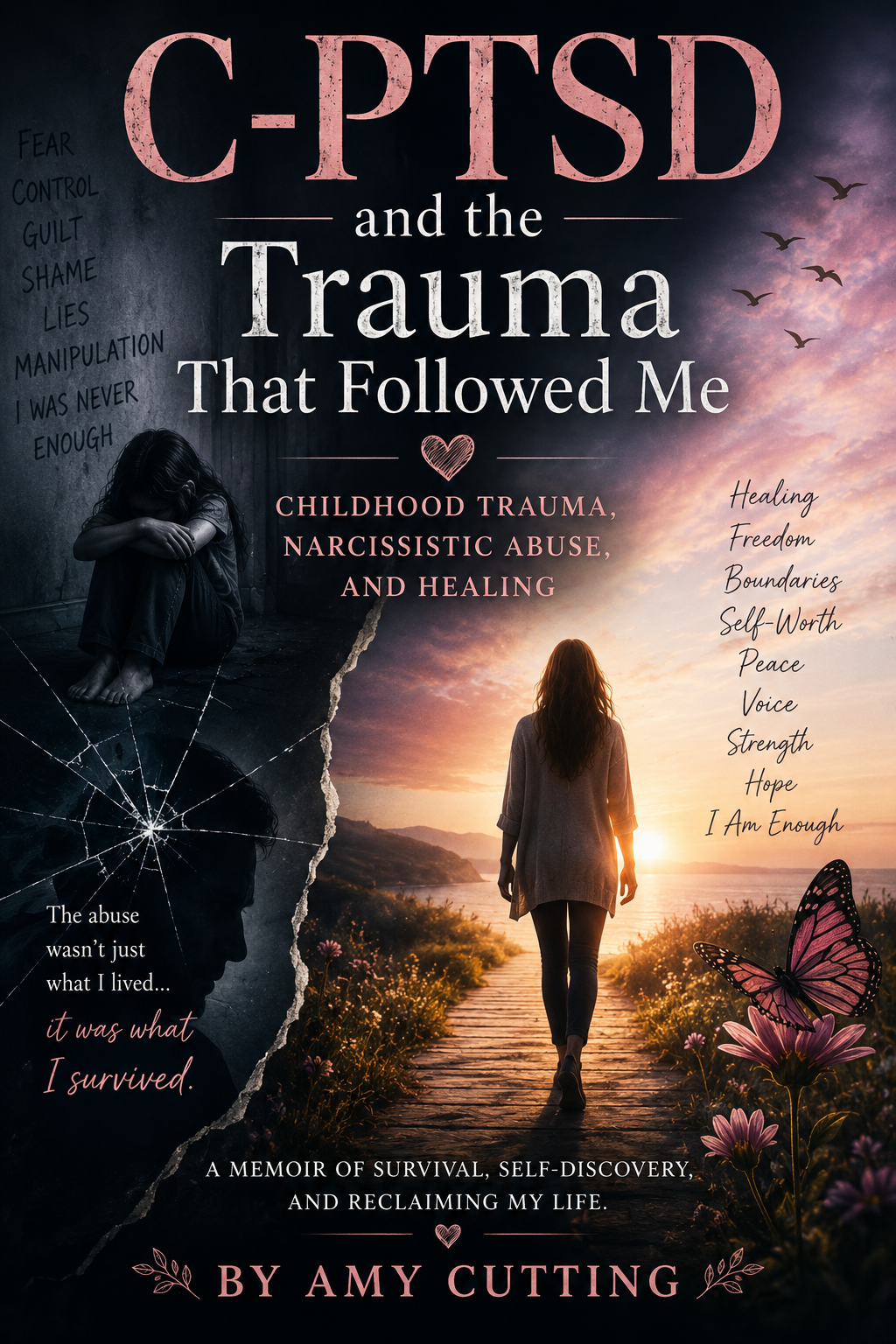
This book is both a memoir and a journey toward understanding. It is the story of growing up in fear, living in survival mode, and carrying trauma long after childhood ended. It is also the story of healing, self-discovery, resilience, and learning that my past did not have to define my future.
Within these pages, I share my experiences with childhood trauma, narcissistic abuse, anxiety, panic, C-PTSD, FND, and the long process of reclaiming my voice and rebuilding my life. I also explore how trauma affects the brain, body, nervous system, and emotional development, and why healing is possible even after years of pain.
This book is for survivors.
It is for those who have spent years wondering why they struggle.
It is for those who feel trapped in survival mode.
It is for those who carry invisible wounds that others cannot see.
Most of all, it is for those who need to know that they are not alone.
Trauma may have followed me for much of my life.
But healing followed too.
And that is where this story truly begins.
— Amy Cutting